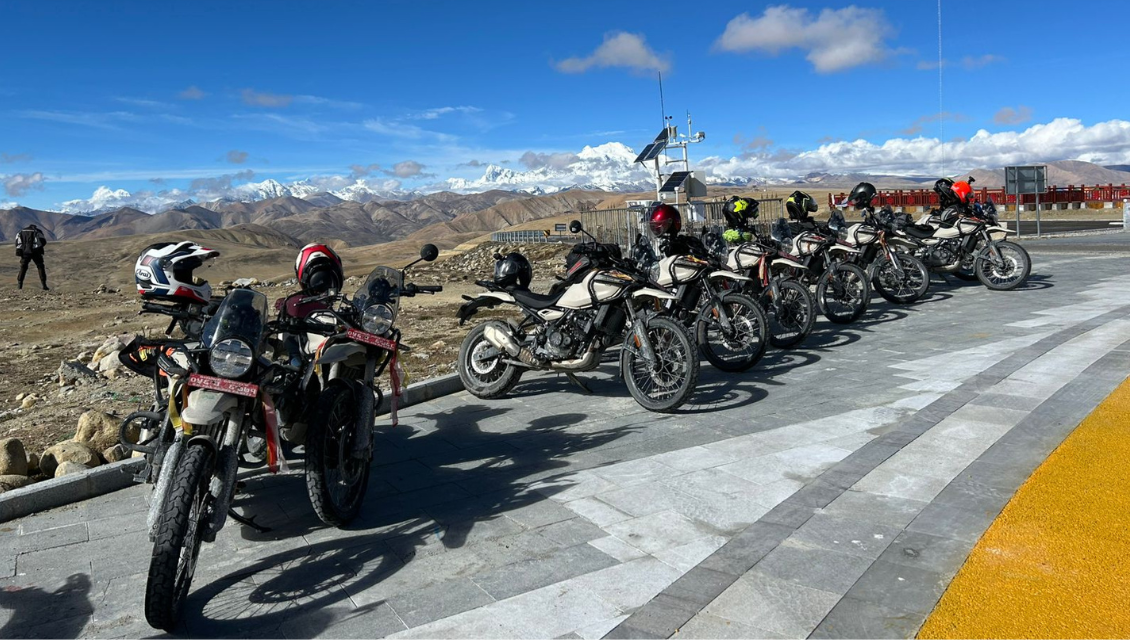
Motorbike Tour in Nepal & Tibet – The Ultimate Himalayan Overland Expedition
Motorbike touring in Nepal and Tibet is one of the most exceptional overland adventure experiences in the world. It combines two contrasting Himalayan landscapes—Nepal’s green valleys and rugged mountain roads with Tibet’s vast, high-altitude plateau—into a single, unforgettable expedition.
This journey is designed for experienced riders seeking more than a road trip. It is a true Himalayan expedition on wheels, where adventure, endurance, culture, and geography come together in one of the most dramatic regions on Earth.
From winding Himalayan highways, remote off-road tracks, and river valleys in Nepal to the wide, open, and extreme altitude roads of Tibet, this tour offers a rare opportunity to ride across international borders through some of the highest motorable terrain in the world.
Why Choose a Nepal & Tibet Motorbike Expedition?
A motorbike tour in Nepal and Tibet is not a standard riding holiday—it is a long-distance expedition that challenges both physical endurance and riding skill. One of the most compelling reasons to choose this journey is the diversity of terrain and altitude.
In Nepal, riders experience dense cultural valleys, winding hill roads, suspension bridges, and adventurous off-road trails that pass through traditional Himalayan settlements. The landscapes are constantly changing, from subtropical lowlands to high alpine environments.
Once crossing into Tibet, the environment transforms dramatically. Riders enter the “Roof of the World,” where vast open plateaus stretch to the horizon at elevations above 4,000 meters. Roads are smoother but exposed to extreme altitude, strong winds, and rapidly changing weather conditions.
Another key attraction is the cultural depth of the journey. Nepal offers rich Hindu and Buddhist heritage, while Tibet introduces ancient Tibetan Buddhist traditions, monasteries, prayer flags, and historic cities such as Lhasa.
Unlike standard motorcycle tours, this expedition also includes border crossings, international permits, and convoy riding regulations in Tibet, making it a highly organized and structured adventure.
Nepal Section – Himalayan Valleys and Mountain Trails
The Nepal portion of the journey typically begins in Kathmandu, the capital city surrounded by historic temples, UNESCO World Heritage Sites, and bustling mountain roads.
From here, riders gradually move toward western and northern Himalayan regions. The route may include scenic highways to Pokhara, followed by off-road sections toward Mustang or Annapurna region depending on the itinerary.
Nepal’s riding experience is highly diverse:
- Smooth highways through terraced hills and river valleys
- Narrow mountain roads carved into cliffsides
- Suspension bridges crossing deep gorges
- Off-road tracks in remote Himalayan regions
- Traditional villages influenced by Sherpa, Gurung, and Tamang cultures
Optional routes such as Upper Mustang provide a desert-like Himalayan environment with dramatic cliffs, ancient monasteries, and restricted area exploration, making Nepal an ideal warm-up phase for high-altitude riding.
Tibet Section – The Roof of the World Riding Experience
The Tibet section is the highlight of the expedition and one of the most unique motorcycling experiences globally. After crossing the Nepal–China border, riders enter the Tibetan plateau, a vast high-altitude region with an average elevation above 4,000 meters.
Here, the landscape becomes surreal—endless open roads, snow-capped peaks on the horizon, and a deep silence broken only by wind and engines.
Key highlights of the Tibet riding experience include:
- Long-distance riding across high-altitude desert plateaus
- Visits to Lhasa, the spiritual capital of Tibet
- Exploration of historic monasteries and Buddhist heritage sites
- High mountain passes with panoramic Himalayan views
- Controlled convoy riding system required for foreign travelers
Possible access routes toward Everest North Base Camp region (permit dependent), offering views of Mount Everest (8848.86 m) from the Tibetan side
Tibet is known for its minimal traffic, wide roads, and extreme altitude conditions, making it both physically demanding and visually extraordinary.
Difficulty Level and Riding Conditions
Motorbike tours in Nepal and Tibet are classified as moderate to advanced expeditions depending on the chosen route.
Riders should expect:
- Mixed terrain: paved highways, gravel roads, sand, and mountain passes
- Altitude range: 1,000 meters to over 5,200 meters
- Long daily riding hours in remote environments
- High-altitude effects such as fatigue and reduced oxygen levels
- Variable weather conditions including strong winds and cold temperatures
Due to these factors, prior experience in long-distance motorcycle touring or off-road riding is strongly recommended.
Best Season for Motorbike Touring
The most suitable seasons for Nepal and Tibet motorbike expeditions are:
Spring (March–May):
This is one of the best times for riding, offering stable weather conditions, clear Himalayan views, and comfortable temperatures.
Autumn (September–November):
The most popular season, with dry roads, excellent visibility, and predictable weather patterns across both Nepal and Tibet.
Winter in Tibet is extremely cold and often inaccessible, while Nepal’s monsoon season brings heavy rain, landslides, and poor road conditions in mountain regions.
Permits and Travel Requirements
Due to the international nature of this expedition, multiple permits and regulations are required:
- Nepal motorcycle permits and restricted area permits (if applicable)
- Tibet Travel Permit (mandatory for all foreign riders)
- Chinese group visa for entry into Tibet
- Guided convoy travel requirement within Tibet
- Border crossing documentation and coordination
All Tibet motorbike tours must be organized through authorized and licensed tour operators.
Motorbikes and Support System
Common motorcycles used for Himalayan touring include Royal Enfield Himalayan, Royal Enfield Classic, and other adventure touring bikes depending on the package.
Professional tour support typically includes:
- Experienced road captain and guide team
- Backup support vehicle for luggage and emergencies
- Mechanical assistance and spare parts support
- Fuel coordination in remote areas
- Navigation and route management throughout the journey
This support system ensures safety, reliability, and smooth operation across challenging terrain.
Who is This Tour For?
This motorbike expedition is ideal for:
- Experienced riders with long-distance touring background
- Adventure travelers seeking multi-country Himalayan exploration
- Riders comfortable with altitude, endurance riding, and remote terrain
- International travelers looking for a once-in-a-lifetime overland expedition
It is not recommended for beginner riders due to altitude, distance, and terrain complexity.